
How to Compare Stone Supplier Quotations Beyond the Unit Price
Two suppliers quote the same marble countertop at different prices. Before negotiating the lower number, check whether both prices cover the same material, dimensions, fabrication and delivery scope. A difference in what is included can matter more than the difference in unit price.
For importers and wholesale buyers, the useful comparison is the cost of receiving the agreed products, in the agreed condition, with the information needed to sell or distribute them. Use the checks below to turn separate quotations into a comparable buying decision.
1. Start with the same specification
Send each supplier the same enquiry pack, with a date or revision number. If one supplier prices an old drawing while another includes a revised edge detail, their totals are not directly comparable.
- Identify the material, finish and intended application. Include reference photographs or an approved sample where available.
- List finished dimensions, thickness, quantities and units for every item. Separate slabs, cut-to-size pieces and fabricated components.
- Mark visible edges, sink or hob openings, tap holes, joints, returns and any reinforcement requirements for review.
- State the destination and the packing or labelling requirements that affect your receiving process.
Ask suppliers to list exclusions and proposed alternatives separately. An unpriced opening or a substituted finish should be visible before you compare totals.
2. Confirm the material behind the name
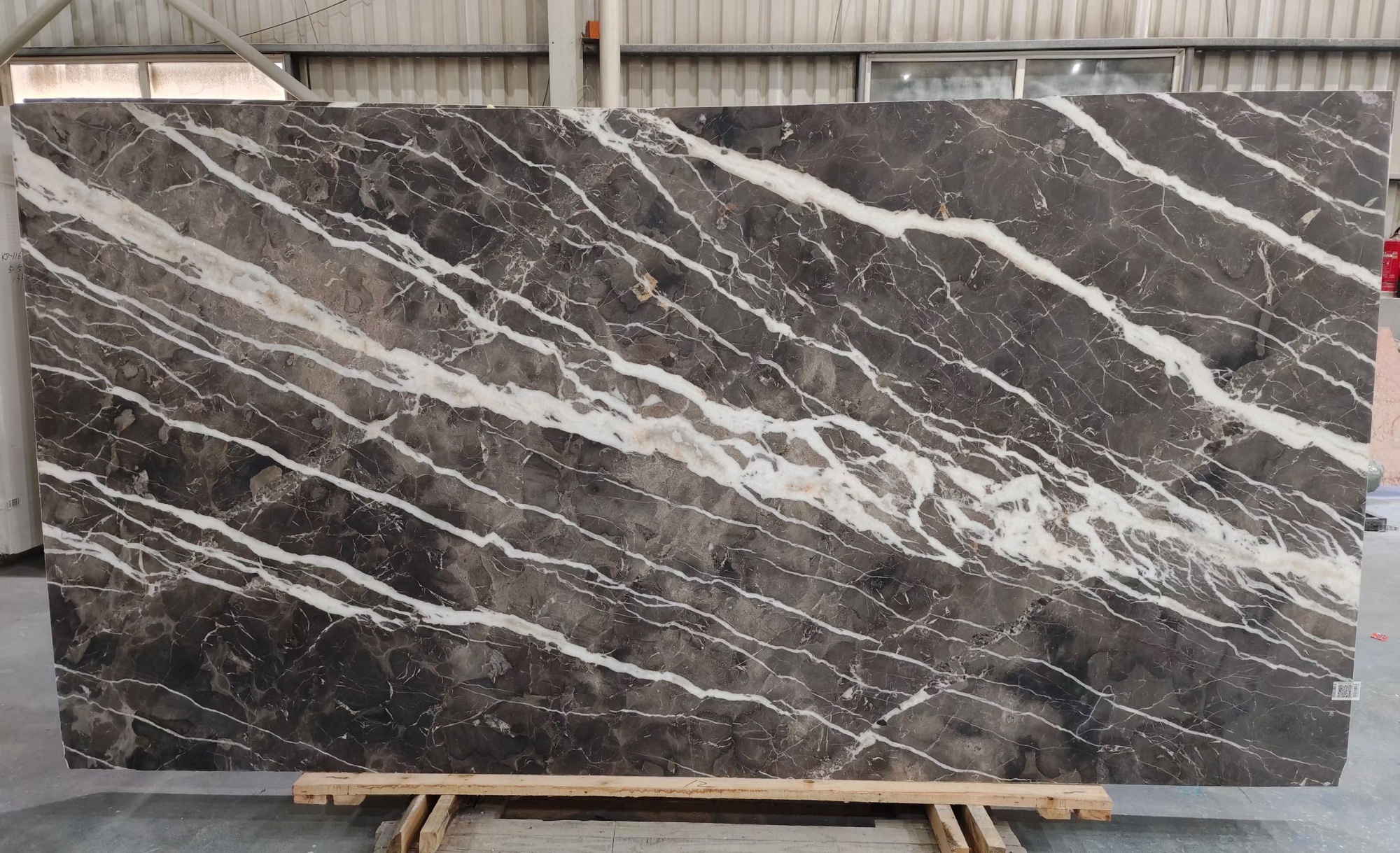
A commercial stone name alone does not establish the appearance of the supplied batch. With veined marble, ask what the quotation is based on: a general material reference, a sample, photographs of available slabs, or a specifically identified selection.
Clarify the range of colour and veining you are willing to accept. Where the appearance of adjacent pieces matters, discuss layout and joint positions before cutting. Also ask about visible filling, resin or repairs and how these will be reviewed. Do not assume that a photograph reserves the material; any reservation needs separate confirmation.
For repeat orders, keep the accepted reference and batch photographs with the order records. Future purchases may need a new appearance review rather than an assumption of an exact match.
3. Separate thickness from edge appearance
A thick-looking edge is not necessarily the same as a solid slab of that thickness. A quotation should distinguish the actual stone thickness from a built-up or mitred edge detail. Agree which faces are finished and how exposed ends and corners will be treated.
For fabricated pieces, compare the full scope: edge profile, polishing, openings, grooves and any agreed supports or reinforcement. Use drawings to make these details clear. Their suitability still needs review for the specific material and installation.

4. Check the pricing unit and the full order
A price per square metre, per slab and per finished piece describes different things. For cut-to-size work, ask whether the price is based on finished area, the material allocated to the order, or another stated basis. Confirm how small pieces, cutting allowance and minimum quantities are handled.
Compare totals for the same item schedule, not an attractive headline rate. Include samples, agreed spare pieces, fabrication, packing and any separately quoted services. Keep optional items outside the main total so they do not distort the comparison.
For example, two offers for a vanity-top order may look similar until you notice that one includes polished sink openings and individual identification labels while the other excludes them. Ask for both offers on the same scope before deciding which is better value.
5. Put packing and inspection in writing
Ask how the finished pieces will be protected, grouped and identified for your receiving team. The quotation should state whether packing is included and what form it takes. Confirm crate dimensions and weights when available, and check that your warehouse can receive and handle the shipment.
Agree the checks required before dispatch: dimensions, thickness, finish, visible edges, openings and piece counts, as relevant to the order. If you require inspection photographs, a third-party inspection or particular records, confirm the arrangement and cost in advance. A photograph is useful evidence of what it shows; it is not a substitute for every required check.
6. Compare delivery terms on the same basis
Record the trade term, its version and the named place or port. “FOB” or “freight included” without the relevant location leaves an important part of the comparison unclear. The International Trade Administration provides an overview of Incoterms and the importance of named delivery locations.
Ask which freight, insurance, clearance, duties, destination charges and onward-delivery costs are included or excluded, as applicable to the agreed term. Have your forwarder check the remaining transport scope. Keep the supplier price and your estimated total receiving cost as separate figures.
Also distinguish production readiness from transit time. Confirm what starts the production lead time—such as deposit receipt, drawing approval or material confirmation—and whether shipping estimates are included. Payment milestones, quotation validity and the procedure for reporting shortages or damage should be recorded separately.
A practical quotation comparison sheet
Use one column per supplier. Mark an unanswered item as “not confirmed” rather than treating it as included.
| Check | What to record for each supplier |
|---|---|
| Material | Name, finish, sample or slab reference, accepted appearance |
| Finished products | Item schedule, dimensions, thickness and quantities |
| Fabrication | Edges, openings, visible faces and agreed additional work |
| Price basis | Currency, pricing unit, full-order total and exclusions |
| Packing | Included scope, piece identification and receiving information |
| Inspection | Checks, records, inspection arrangement and any extra cost |
| Delivery | Trade term, version, named place and transport exclusions |
| Timing and payment | Lead-time trigger, milestones, quote validity and issue-reporting procedure |
Keep the same record for repeat purchases
After placing the first order, retain the approved drawings, material references, confirmed quotation and packing information together. For a reorder, identify what stays the same and what needs fresh confirmation, especially material appearance, availability, price and timing. This gives both sides a clearer starting point than a message asking for “the same as last time”.
Preparing an enquiry for Stone XM
Stone XM supplies custom marble and other stone products from Xiamen, China. To discuss an order, send your item list or drawings, quantities, material references, finish requirements and delivery destination. Include any packing, labelling or inspection requirements you need reviewed with the quotation.
Send your enquiry or browse the stone product references before preparing your specification.